
The new rules, explained
Washington is in the process of rewriting the rulebook for crypto right now
— without the law degree usually required to follow along.
Last updated: June 2026. This is a fast-moving story, so treat this page as a snapshot rather than the final word.
Why crypto has felt like the Wild West
For most of its life, crypto has existed in a legal grey area. Nobody could quite agree on what it even was — was a digital coin more like a share in a company, or more like a lump of gold? It sounds like a dry question, but the answer decides who's in charge of governing it. Historically, various government agencies believed they were responsible for controlling crypto, but there was never a definitive decision.
The result was years of confusion: rules that contradicted each other, scammers operating in the gaps, and ordinary people left without the protections they'd take for granted at a bank. That's the mess lawmakers are now trying to clear up.
What's changing now
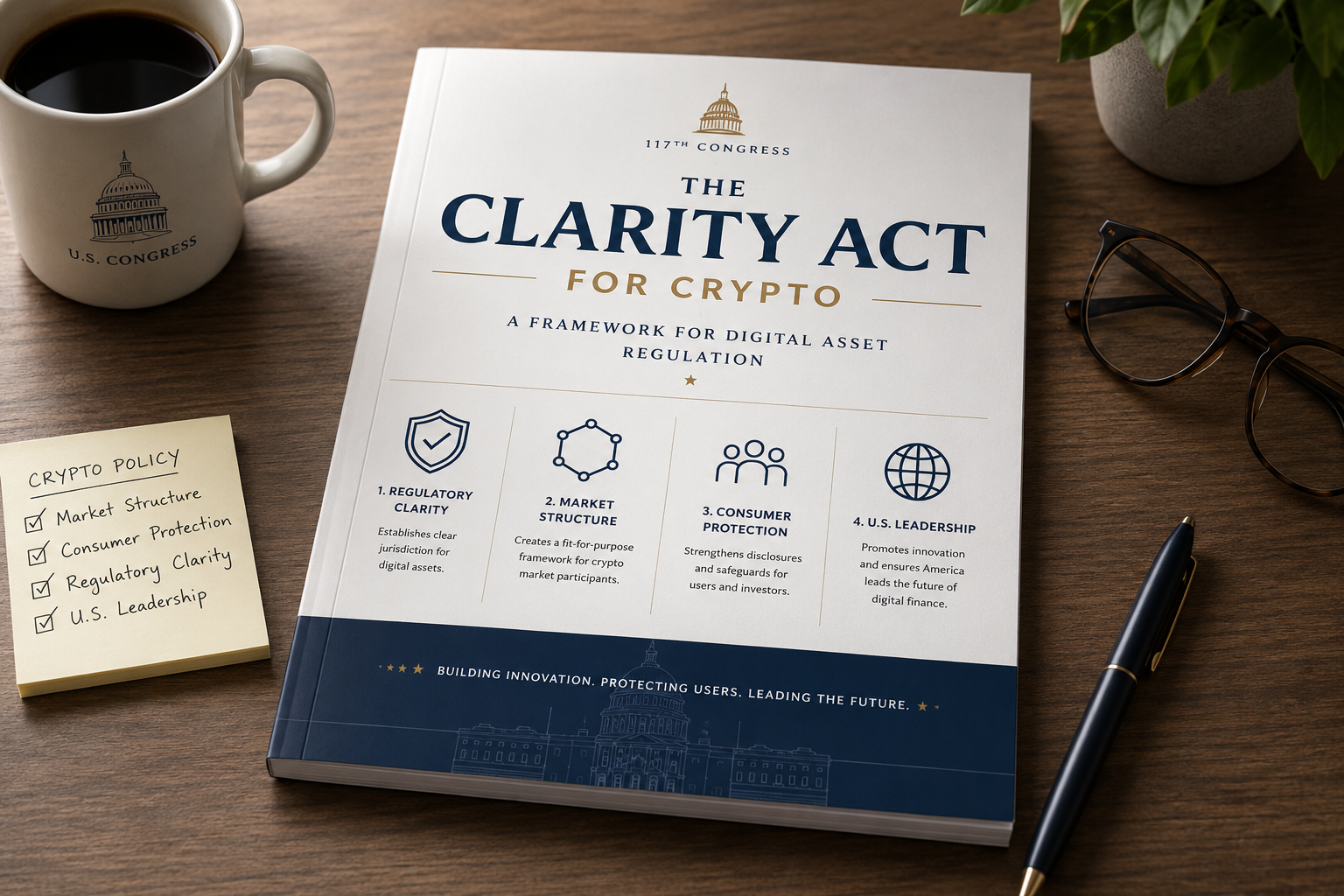
The big one is a bill nicknamed the CLARITY Act (its full name is the Digital Asset Market Clarity Act — you can see why they shortened it).
In plain English, it tries to settle the “what is crypto?” question by deciding which government watchdog regulates which kind of crypto.
The two watchdogs involved are the SEC (the Securities and Exchange Commission, which polices shares and investments) and the CFTC (the Commodity Futures Trading Commission, which polices commodities like oil and wheat). Sorting out who's responsible for what is meant to bring order to the chaos.
Where it stands today: the bill passed the House of Representatives in July 2025, then got stuck in the Senate twice. In May 2026 a key Senate committee approved it, and at the time of writing it's waiting for a full vote in the Senate. It is not yet law — it still has several hurdles to clear, and may yet change or stall. Watch this space...
What it could mean for ordinary savers
If clear rules are agreed upon, the likely effects are worth understanding:
- More legitimacy. Clear rules tend to coax cautious institutions — banks, pension funds, household-name companies — in off the sidelines. That's part of why crypto keeps turning up in mainstream financial news. It's already popular, but it could see much wider adoption soon.
- More protection. Regulation usually brings consumer safeguards: clearer disclosures, registered firms, and somewhere to turn when things go wrong.
- Fewer dark corners. The clearer the rules, the harder it becomes for the cowboys to hide in the confusion.
You can think of it as crypto being handed a permission slip to grow up. It's a meaningful shift — but, as ever, the details matter more than the headlines.
What it does not mean
This is the part the excited headlines tend to skip.
- It is not a safety guarantee. A regulated market is still a risky one. Prices will still lurch about alarmingly.
- It is not a green light to pile in. “The government is sorting out the rules” is not the same sentence as “you should buy some.”
- The scammers haven't gone home. New rules won't stop a stranger messaging you about a once-in-a-lifetime opportunity. The Stay Safe page still applies, every word of it.
How to keep up, without the headache
This story changes by the week, and the coverage is usually written for traders and lawyers rather than the rest of us. That's the point of this site.
Every week I send a short, plain-English email covering what actually happened, what it means for people like us, and which new scam is doing the rounds. It's the easiest way to stay informed without wading through the jargon yourself.
Get the Free Weekly EmailStay in the loop — in plain English
Start with the free Curious About Crypto guide, which gathers the essentials in one place. No hype, no jargon, and no homework. Just useful information and guidance.
Get the Free GuideNothing on this website is financial advice. I'm an educator, not a financial adviser. Cryptocurrency is volatile and you can lose money — never invest more than you can comfortably afford to lose, and consider speaking to a regulated financial adviser before making any investment decision.